
Training Outcomes Within Your Budget!
We ensure quality, budget-alignment, and timely delivery by our expert instructors.
Table of Content
Recent Blogs
Cloud Computing Salary Guide 2026: AWS, Azure & GCP
August 18th, 2026
CompTIA Cloud+ Certification: Complete Guide
August 18th, 2026
AWS DevOps Engineer Certification: Complete Guide
August 18th, 2026
AWS Developer Certification: Study Guide & Exam Tips
August 18th, 2026
ISO 22000 Documentation Requirements
August 18th, 2026
ISO 31000 vs ISO 27001
August 18th, 2026
ISO 22000 vs HACCP
August 17th, 2026
PMP Exam July 2026: What's Changed and How to Prepare
August 17th, 2026
CISSP Book Insights to Keep Your Exam Preparation on Track
August 14th, 2026
Benefits of ISO 14001 Certification
August 14th, 2026
CISM Certification Cost and Roadmap for Career Success
August 12th, 2026
ISO 20000 IT Service Management
August 10th, 2026
What is ISO Lead Auditor Certification?
August 10th, 2026
ISO Auditor Roles and Responsibilities
August 10th, 2026
Why Choosing PMI RMP Certification Can Benefit Your Career
August 10th, 2026
Project Risk Management Strategies for Successful Projects
Last updated on August 10th, 2026
- Share
-

-

-

-

-

 Sachin Kumar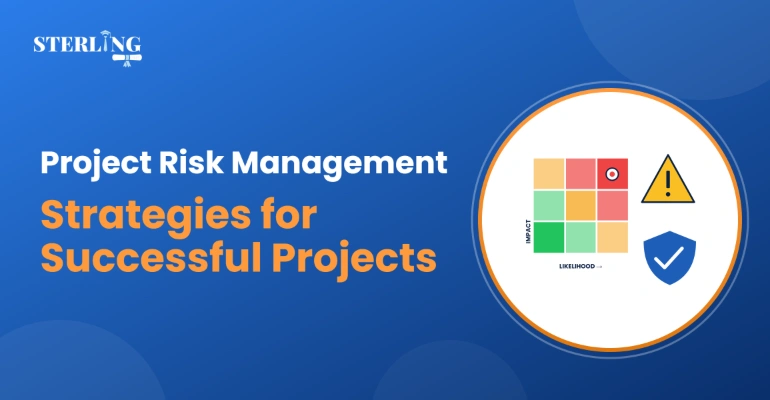
For professionals across the United States who manage teams in construction, IT, healthcare, finance, and other industries, managing risk properly often makes the difference between a project that struggles and a project that succeeds.
Top Project Risk Management Strategies Explained
Introduction
Every project carries some level of uncertainty, deadlines may shift, budgets may increase, team members might leave, and technology may not work as expected. These situations are normal in projects. Understanding how structured Project Risk Management Strategies in real-world projects are applied across industries helps teams anticipate these uncertainties before they escalate into major disruptions.
For professionals across the United States who manage teams in construction, IT, healthcare, finance, and other industries, managing risk properly often makes the difference between a project that struggles and a project that succeeds. In this guide, we will explain practical and realistic approaches. We will walk through the project risk management process, discuss common project management risks, and outline proven techniques.
Introduction to Risk in Projects
Before discussing detailed Project Risk Management Strategies, it is important to clearly understand what risk means in project management.
What Is Risk in Project Management?
Risk in project management refers to an uncertain event that may affect project objectives. The effect can be negative or positive. Most teams focus on negative outcomes such as cost increases, schedule delays, scope of changes, or quality issues. These are threats. However, risk can also create opportunities. For example, new technology may reduce costs and complete work earlier than planned.
Understanding risk in project management begins with accepting one simple fact uncertainty will always exist. The goal is not to remove all risks. The goal is to manage it in a clear and structured way. Projects that ignore risk often face surprises. Projects that prepare for risk respond with control and confidence.
What Is a Risk Management Strategy?
So, what is a risk management strategy? A risk management strategy is a clear and organized plan that explains how a project team will identify, analyze, respond to, and monitor risks during the entire project lifecycle.
Strong Project Risk Management Strategies clearly define:
- How risks will be identified
- Who will stand responsible for managing each risk
- How probability and impact will be evaluated
- What response actions will be taken
- How risks will be reviewed and tracked
Without a defined strategy, teams react to problems only after they occur. With a strategy, teams prepare in advance. This creates control instead of confusion.
The Project Risk Management Process
Following a structured project risk management process gives your team a clear path forward. Even though every company does things a bit differently, the basic steps usually look the same.
A lot of teams find it useful to look at how the different phases of a project life cycle help with planning and staying in control because that perspective shows where risks typically arise and why early identification matters.
1. Risk Identification
Risk identification is the very first step where the team sits down to list every possible project management risk that could mess with your budget, quality, or overall performance.
To get this right, you really need an open, honest discussion. Everyone on the team from the interns to the senior leads should feel totally comfortable speaking up about their concerns. Even if a risk seems small or unlikely, you should still get it on paper; it's much better to have it recorded than to be blindsided by it later.
2. Risk Analysis
After risks are identified, they must be evaluated. Teams estimate each risk and its potential impact.
This stage includes qualitative vs quantitative risk analysis, which we will explain shortly.
3. Risk Response Planning
In this stage, teams decide how they will respond to each major risk. The main responses include avoidance, transfer, acceptance, or risk mitigation.
Clear action plans should be documented. Risk responses should not remain in general ideas. They must be specific.
4. Risk Monitoring and Control
Risk management does not end after planning. Throughout the project, risks must be reviewed regularly. New risks may arise. Existing risks may change priority.
The project risk management process ensures that risk handling remains organized and consistent.
Types of Risk in Project Management
Knowing the different types of risk in project management helps a team look at the big view while planning.
Common categories include:
- Strategic Risks: These usually involve shifts in business direction, new leadership, or changing priorities at the top.
- Financial Risks: This group covers budget, or costs that simply end up higher than you expected.
- Schedule Risks: This occurs when tasks take longer than expected or when one delay starts with a domino effect.
- Operational Risks: These deal with internal process failures, systems crashing, or general problems in the workflow.
- Technical Risks: These are tied to technology limits, software bugs, or tricky integration problems.
- External Risks: These are outside your control, like new government laws, market changes, or vendors who can't deliver.
When you can name these specific types of risk in project management, your Project Risk Management Strategies become much more reliable.
Project Management Risk Identification Techniques
Using structured project management risk identification techniques ensures important risks are not overlooked.
Common techniques include:
- Brainstorming sessions: Gathering the whole team to share ideas and concerns.
- Reviewing lessons learned: Looking at past projects to see what went wrong before.
- Expert interviews: Talking with senior staff or specialists about potential red flags.
- Standard risk checklists: Using historical guides to identify common industry issues.
- Risk workshops: Meeting with stakeholders to align potential hurdles.
The more sources you use, the better your Project Risk Management Strategies will be.
Qualitative vs Quantitative Risk Analysis
Knowing the difference between qualitative vs quantitative risk analysis helps teams focus their energy on the right problems.
Qualitative Risk Analysis
Qualitative analysis ranks risk by impact and probability using simple labels like high, medium, or low. This method is fast and easy to use. It works great for most small or medium projects because it depends on expert experience
Quantitative Risk Analysis
Quantitative analysis uses numerical data and models to estimate cost or schedule impact.
This method is more detailed and is often used for large or complex projects. It might use tools like Monte Carlo simulations to show a range of possible outcomes.
Many teams begin with qualitative analysis and apply quantitative analysis to the highest priority risks. Both approaches support effective Project Risk Management Strategies.
Core Project Risk Management Strategies
Now let us review the most widely used Project Risk Management Strategies.
1. Risk Avoidance
Risk avoidance removes the threat completely. If a part of the project is too risky, you change the scope or the path. For example, if new software is unstable, the team may choose a proven system instead.
2. Risk Mitigation
Mitigation is a proactive defense. The goal is simple: reduce the chances of a risk happening or soften the impact if it does.
3. Risk Transfer
Risk transfer moves responsibility to a third party. Insurance, outsourcing, or specific contract clauses are common examples. You are paying to move the potential loss to someone else.
4. Risk Acceptance
Some risks are minor. If the price of fixing the problem is higher than the damage it would actually cause, then simply monitoring the situation might be the smartest move.
Effective Project Risk Management Strategies use a balanced mix of these responses.
Risk Management and Risk Mitigation
Risk management and risk mitigation are related but not identical.
Risk management includes the full process: identification, analysis, response planning, and monitoring. It is the overall framework.
Risk mitigation is one response option within that process. It is a specific tactic used to lower risk levels.
Understanding difference between Risk management and risk mitigation improves clarity in execution and reporting.
How to Manage Project Risks Effectively
Professionals often ask, "How to manage project risks effectively?" The real secret is just being consistent.
- Start early: Talk about potential risks during your very first meetings while you are still placing the project plan together.
- Assign ownership: If no one is responsible for a risk, it will likely be forgotten. Every major threat needs one specific person who takes the lead on watching it and making sure the plan stays on track.
- Review regularly: Make it a habit. Use weekly or biweekly check-ins to keep these risks front and center, so the team doesn't lose their view.
- Communicate clearly: Talk to your stakeholders. Keeping them in the loop about major risks and what you are doing to fix them prevents unpleasant surprises later.
A deeper understanding of formal risk frameworks can also be gained through a structured learning path that explains standard risk management principles and methodologies, which helps clarify how organizations apply consistent processes to manage uncertainty across projects.
Project Risk Control Strategies
Risks do not stay the same as a project moves forward. This is exactly why you need solid project risk control strategies in place.
- Ongoing Monitoring: Keep a close watch for early warning signs, such as an agent missing a minor deadline.
- Issue Escalation: When a risk turns into a serious problem, make sure to inform management immediately.
- Response Adjustment: Change your mitigation plans whenever the project environment or conditions shift.
Using effective project risk control strategies ensures your risk plans stay useful and up to date.
How to Manage Project Risks in Real Projects
It’s a common question among project managers: "How to manage project risks when you’re already short on time?" The best way to handle this is to keep things practical rather than over-complicating the process.
- Identify the top ten risks, especially the ones that could actually stop your project in its tracks.
- Rank them based on how likely they are to happen and what kind of damage they’d really do.
- Assign owners to these specific risks, so someone is always keeping an eye on them.
- Define response actions that your team can actually pull off without getting overwhelmed.
- Review them regularly as a standard part of your weekly status updates.
Sticking to these simple, consistent steps is what makes Project Risk Management Strategies work in everyday operations.
Risk Management Strategy Example
To see how these ideas play out, here is a practical Risk Management Strategy Example based on a common software project scenario:
- Project: Software implementation
- Risk: Vendor delays integration
- Impact: A schedule delay of roughly three weeks
- How to respond: Set up milestone reviews every two weeks so you can catch any potential delays before they become a disaster.
- Add specific contract penalties for any missed delivery dates to keep the vendor motivated.
- Find a backup vendor who can step in immediately if the primary one ends up failing.
Using a clear, simple structure like this is the best way to build confidence across your whole organization.
Project Risk Strategies Across Project Phases
- Initiation Phase: Focus on alignment and feasibility risks.
- Planning Phase: Develop detailed project risk mitigation strategies for the whole timeline.
- Execution Phase: Apply monitoring and project risk control strategies as work happens.
- Closing Phase: Document lessons learned for future improvement.
Using phase-based project risk strategies builds long-term improvement.
How to Handle Risk Management Under Pressure
Project managers often wonder how to manage project risks when things start spinning out of control. When the pressure is on, having solid Project Risk Management Strategies in place gives a clear path forward.
- Re-evaluate top risks immediately to see exactly what has shifted since your last check.
- Focus on high-impact threats first and don't be afraid to let the smaller, minor issues go for now.
- Avoid overcomplicating your analysis because when you need to act fast, a "good enough" plan is better than a perfect one that arrives too late.
In the end, structure is what prevents panic. Think of your risk plan as a map that is most valuable when you feel like you’ve lost your way.
Common Project Management Risks
Some common project management risks in U.S. organizations include:
- Scope creep: Adding more work without more time or budget.
- Weak stakeholder engagement: When leaders don't support the project.
- Resource turnover: Losing key people during a critical phase.
- Regulatory changes: New laws that affect how the work is done.
Tracking recurring patterns improves future Project Risk Management Strategies.
Strengthening Organizational Risk Culture
Effective risk management strategies must align with business goals. They should reflect:
- Organizational priorities
- Compliance requirements
- Financial limits
Organizations that invest in structured capability development through a professional certification program in project and risk management disciplines often establish stronger governance frameworks and more consistent Project Risk Management Strategies across departments.
Culture and Communication
Even strong Project Risk Management Strategies fail without open communication.
Encourage:
- Early reporting of concerns without fear of blame.
- Honest updates on where things stand.
- Collaboration across departments to solve problems.
Transparency strengthens performance. If people feel safe talking about risk, they will solve it together.
Leadership’s Role in Risk Management
- Encouraging transparency across the entire company so problems aren't hidden.
- Approving contingency budgets to handle emergencies when they arise.
- Supporting accountability for specific people managing each risk.
- Reviewing risk reports on a regular basis to stay informed.
When leadership is involved, it naturally improves discipline and consistency throughout the project.
Continuous Improvement
Risk management should improve over time. After each project:
1. Conduct lessons learned sessions to see what worked.
2. Update risk registers for the next project team.
3. Refine assessment practices based on what actually happened.
Continuous improvement strengthens future Project Risk Management Strategies.
Conclusion
Success usually comes down to how well a team prepares for the unexpected. By using structured Project Risk Management Strategies, you create a clarity and control that keeps your project from falling apart. Identifying threats early and responding consistently allows organizations to handle uncertainty with real confidence.
In the current competitive landscape, disciplined risk management isn't just a safety measure; it is a fundamental requirement for delivering successful project outcomes.
Recommended Reads
Get Certified With Industry Level Projects & Fast Track Your Career
Checkout Top 10 Highest Paying Jobs
Frequently Asked Questions
It is a structured plan that defines how a project team identifies, evaluates, and responds to potential uncertainties throughout the project life cycle.
These strategies reduce uncertainty, protect project budgets, and prevent minor issues.
The process consists of four key phases: Identification (finding risks), Analysis (evaluating impact), Response Planning (deciding actions), and Monitoring (ongoing tracking).
Qualitative analysis ranks risk as "High, Medium, or Low" based on expert judgment, while quantitative analysis uses numerical data and formulas to predict specific costs or delays.
The four core strategies are Avoidance, Mitigation, Transfer, Acceptance.
Risk management is the complete, high-level framework for handling uncertainty, whereas mitigation is a specific tactical action taken to reduce a threat.
Standard risks include Scope Creep, Schedule Delays, and Resource Turnover.
The first step is Risk Identification, which involves gathering the team to list every possible event that could influence the project’s success.
Risks should be reviewed regularly typically during weekly or bi-weekly status meetings to ensure the plan remains relevant as conditions change.
These are the ongoing oversight activities, such as tracking early warning signs and adjusting response plans, to maintain control as the project progresses.