
Training Outcomes Within Your Budget!
We ensure quality, budget-alignment, and timely delivery by our expert instructors.
Table of Content
- Understanding CCNA Salary and Job Opportunities
- What Is CCNA and Why Does It Create Real Opportunities?
- Entry-Level CCNA Salary
- Mid-Level CCNA Salary and Career Growth
- Senior-Level and Expert CCNA Career Path
- Jobs After CCNA Certification: Where Can You Go at Every Stage?
- Is CCNA Worth It in 2026?
- Specialized Opportunities: Cloud, Security, and Automation
- CCNA Salary by Country
- Is CCNA Enough to Get a Job?
- Conclusion
- Recommended Reads
Recent Blogs
Cloud Computing Salary Guide 2026: AWS, Azure & GCP
August 18th, 2026
CompTIA Cloud+ Certification: Complete Guide
August 18th, 2026
AWS DevOps Engineer Certification: Complete Guide
August 18th, 2026
AWS Developer Certification: Study Guide & Exam Tips
August 18th, 2026
ISO 22000 Documentation Requirements
August 18th, 2026
ISO 31000 vs ISO 27001
August 18th, 2026
ISO 22000 vs HACCP
August 17th, 2026
PMP Exam July 2026: What's Changed and How to Prepare
August 17th, 2026
CISSP Book Insights to Keep Your Exam Preparation on Track
August 14th, 2026
Benefits of ISO 14001 Certification
August 14th, 2026
CISM Certification Cost and Roadmap for Career Success
August 12th, 2026
ISO 20000 IT Service Management
August 10th, 2026
What is ISO Lead Auditor Certification?
August 10th, 2026
ISO Auditor Roles and Responsibilities
August 10th, 2026
Why Choosing PMI RMP Certification Can Benefit Your Career
August 10th, 2026
CCNA Salary and Career Opportunities
Last updated on July 30th, 2026
- Share
-

-

-

-

-

 Sachin Kumar
In this guide, you'll learn about CCNA salary, career opportunities, salary growth, and the job roles you can pursue. Explore our CCNA Career Path guide for more details below.
Understanding CCNA Salary and Job Opportunities
Introduction
If you're thinking about starting a career in networking, one of the first questions you'll ask is, "How much can I earn with a CCNA certification?" CCNA can help you qualify for entry-level networking jobs and build a strong future in the field. Your salary depends on experience, job role, skills, and location, but the certification can improve your earning potential. In this guide, you'll learn about CCNA salary, career opportunities, salary growth, and the job roles you can pursue. Explore our CCNA Career Path guide for more details below.

What Is CCNA and Why Does It Create Real Opportunities?
CCNA is a globally respected certification from Cisco that demonstrates your understanding of how networks are built, maintained, and secured. It shows employers that you can manage real-world network infrastructure, whether you're starting your career or advancing to a senior architecture role.
CCNA teaches networking skills that are useful in many industries, including cloud, telecom, healthcare, banking, and government. The knowledge you gain stays relevant throughout your career, from your first networking job to senior roles.
Why the Networking Field Is Growing
- Every business, from startups to enterprises, depends on connected infrastructure
- Cloud adoption is accelerating demand for professionals who understand network architecture
- Cybersecurity threats are pushing organizations to invest more in network protection
- The rise of automation and software-defined networking is creating entirely new senior-level career tracks
Who Benefits Most From CCNA
- Graduates entering IT for the first time
- IT support professionals ready to move into infrastructure
- Mid-career network engineers looking to specialize and increase pay
- Senior professionals aiming for architecture, leadership, or expert-level (CCIE) roles
- Professionals in non-networking roles transitioning into higher-paying tech careers
Entry-Level CCNA Salary
Entry-level CCNA salary without experience in the US Salaries typically fall between $45,000 and $65,000 annually. In India, the starting range is approximately ₹4,00,000 to ₹6,00,000 per year, competitive for the IT sector in that region. This is the starting point of the career path, not the ceiling; pay grows substantially from here.
What Drives Entry-Level Salary Differences
- Location: Salaries can be higher in areas where there are more technology companies and IT jobs.
- Industry: Some industries, like banking, telecommunications, and cloud computing, usually pay more than smaller businesses.
- Specialization: Learning basic cloud computing or cybersecurity along with CCNA can help you earn a higher salary.
- Hands-on experience: Practicing in home labs, doing internships, or working on real projects can help you get better jobs and higher pay.
Entry-Level Salary Benchmarks
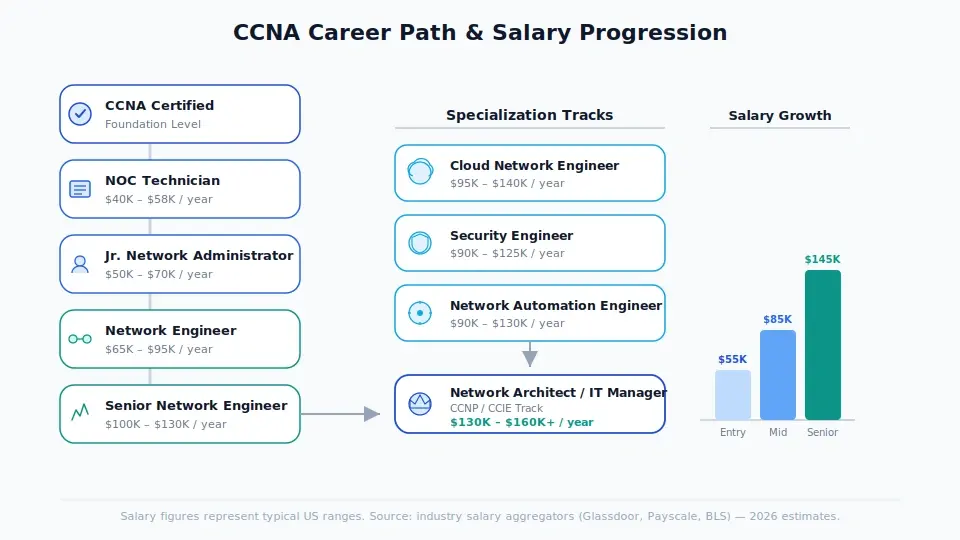
A NOC Technician with a new CCNA certification in the US usually earns $40,000 to $58,000 a year. This is a good first job in networking and helps you get real work experience.
A Junior Network Administrator in the US usually earns $50,000 to $70,000 a year. In this job, you help keep computer networks working, set up network devices, and fix connection problems while learning skills for bigger networking jobs.
Mid-Level CCNA Salary and Career Growth
A Mid-Level Network Engineer with a CCNA certification in the US usually earns $70,000 to $100,000 a year. At this stage, you have a few years of networking experience and take on more responsibility. Learning extra skills, such as cloud computing, cybersecurity, or earning more certifications, can help you qualify for higher-paying jobs.
Network Engineer Salary With CCNA
A Network Engineer with a CCNA certification in the US usually earns $65,000 to $95,000 a year. In this role, you manage larger computer networks, work on more complex tasks, and may lead small projects. Learning skills like cybersecurity, cloud computing, or network automation can help you earn a higher salary.
What Changes at the Mid-Career Stage
- You start designing networks instead of just following instructions.
- Learning skills like cybersecurity, cloud computing, or automation can help you earn a higher salary.
- Earning certifications beyond CCNA, such as CCNP, AWS, or Security+, can help you qualify for higher-paying jobs
- You may begin leading small projects or helping train junior team members.
Senior-Level and Expert CCNA Career Path
Senior network engineer and architecture salary with a CCNA foundation ranges from $100,000 to $160,000+ per year in the US, with CCIE-certified experts regularly exceeding $150,000. This is where the long-term financial case for starting with CCNA becomes clearest: the certification is the foundation, but five to ten, or more, years of building on it is where the largest earnings are.
CCNA to CCNP Career Progression Salary
Moving from CCNA to CCNP can increase your salary by $20,000 to $40,000 a year. In the US, CCNP-certified professionals usually earn $90,000 to $130,000 a year, while CCIE-certified professionals often earn more than $150,000 a year.
As you move from CCNA → CCNP → CCIE, your skills, responsibilities, and earning potential continue to grow. If you're not sure which certification is the right next step, compare CCNA and CCNP to see which one best matches your experience and career goals.
What Senior Roles Look Like
- Senior Network Engineer: $100,000 – $130,000/year owns network design and major incident response
- Network Architect: $110,000 – $160,000/year designs infrastructure strategy across an organization
- IT/Network Manager: Usually earns $110,000 to $150,000 a year. In this role, you lead IT teams, manage network projects, and help make budget and planning decisions.
- CCIE-Certified Expert: Usually earns more than $150,000 a year. This is one of the highest levels of Cisco certification and shows advanced networking skills and expertise.
The CCNA career path offers good long-term growth. If you keep learning new skills, gain experience, and earn more certifications, you can realistically reach a six-figure salary within five to seven years.. With advanced skills and specialization, you can earn even more in senior or expert-level networking roles.
Jobs After CCNA Certification: Where Can You Go at Every Stage?
Jobs after CCNA certification span telecom, banking, healthcare, government, cloud services, and technology companies at entry, mid, and senior levels alike. CCNA creates entry points across several high-demand, high-growth areas of the IT industry, and the same domains keep offering room to grow as you gain experience.
Industries Actively Hiring CCNA Professionals
- Telecommunications: Build, manage, and maintain communication networks.
- Banking and Finance: Keep banking networks secure and running smoothly.
- Healthcare: Connect hospitals, clinics, and medical devices through secure networks.
- Government and Defense: Help maintain secure communication and IT networks.
- Cloud Service Providers: Support cloud-based and hybrid computer networks.
- Technology Companies: Build, manage, and improve networks that support employees and online services.
This flexibility and the ability to move within or between industries at any career stage are among the biggest advantages CCNA offers over more niche certifications.
Is CCNA Worth It in 2026?
Yes, CCNA is worth it in 2026, both as a starting point for beginners and as a foundation for experienced professionals adding new specializations. Network infrastructure demand is expanding alongside cloud adoption, remote work, and cybersecurity needs, and that demand exists at entry, mid, and senior levels alike.
CCNA vs CompTIA Network+ Salary
People with a CCNA certification usually earn 10% to 20% more than those with CompTIA Network+. As you gain experience, this salary difference often grows because many companies use Cisco networking equipment and value the advanced networking skills that CCNA provides.
Certifications After CCNA
The best certification after CCNA depends on the career path you want to choose:
- CCNP Enterprise: For advanced networking jobs and higher salaries.
- AWS Certified Advanced Networking: For careers in cloud networking.
- CompTIA Security+: To start or grow a career in cybersecurity.
- Cisco DevNet Associate: For network automation and programming.
- Azure Network Engineer Associate: For working with Microsoft cloud networks.
- CCIE: for expert-level recognition and top-tier senior salaries
Each of these certifications builds on what CCNA teaches and unlocks a new tier of salary potential, whether you're two years or ten years into your career. They also play an important role in long-term CCNA Career Development, helping you specialize in areas that match your interests and career goals.
Specialized Opportunities: Cloud, Security, and Automation
CCNA is a foundation for three of the fastest-growing areas in IT, and each one offers both mid-level entry points and senior-level ceilings well above $120,000.
Cybersecurity Careers After CCNA
People starting in cybersecurity usually earn $70,000 to $90,000 a year. With more experience, they can earn $120,000 or more.
A CCNA certification gives you a strong foundation in topics like firewalls, VPNs, access control, and network monitoring, making it easier to build a career in cybersecurity.
Cloud Networking Careers After CCNA
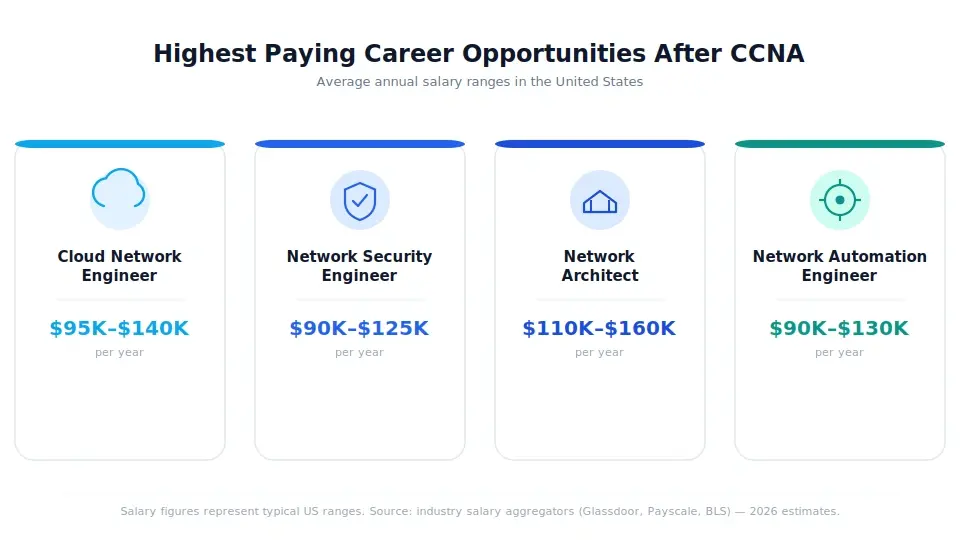
Cloud network engineer salaries in the US range from $95,000 to $140,000 per year, with the upper end going higher in major tech markets for senior cloud architects and pairing CCNA with an AWS or Azure networking certification positions you for this opportunity, whether you're mid-career or aiming for a senior role.
Cisco DevNet vs CCNA Career Path
Network automation careers usually pay $90,000 to $130,000 a year in the US and can grow faster than traditional networking jobs, especially in large companies and cloud-based organizations.
Traditional CCNA roles focus on managing and maintaining networks, while automation-focused paths (like Cisco DevNet) use tools such as Python, APIs, Ansible, and Terraform to automate network tasks. This path often leads to higher pay as you move into mid and senior-level roles.
Highest Paying Jobs With CCNA Certification
|
Specialization |
Salary Range (US) |
|---|---|
|
Cloud Networking |
$95,000 – $140,000/year |
|
Network Security |
$90,000 – $125,000/year |
|
Network Architecture |
$110,000 – $160,000/year |
|
Network Automation |
$90,000 – $130,000/year |
All of these paths start with the foundational knowledge CCNA provides and scale meaningfully with seniority.
CCNA Salary by Country
Earning potential for CCNA-certified professionals varies significantly by country, and the entry-to-senior salary gap widens in higher-paying markets.
|
Country |
Average Annual CCNA Salary |
|---|---|
|
United States |
$65,000 – $95,000 |
|
United Kingdom |
£35,000 – £55,000 |
|
Canada |
CAD $55,000 – $80,000 |
|
Australia |
AUD $70,000 – $100,000 |
|
India |
₹4,00,000 – ₹9,00,000 |
|
UAE |
AED 80,000 – 150,000 |
|
Germany |
€45,000 – €70,000 |
The US and Australia offer the highest absolute salaries, while the UAE is increasingly competitive in the Middle East. Even in markets with lower nominal pay like India, CCNA holders earn well above the IT average, and senior professionals see the largest relative gains.
Is CCNA Enough to Get a Job?
CCNA helps you qualify for many entry-level networking jobs. It is also still useful when applying for mid-level or senior roles, especially when combined with more experience and extra certifications like CCNP or CCIE. Employers value CCNA-certified candidates for infrastructure, support, and operations roles because it shows a strong foundation in networking.
The strongest candidates build real hands-on experience along with their certification. This can include practicing in home labs, using Cisco Packet Tracer, working on open-source networking projects, doing internships, or managing real network projects at higher levels. Learners who need structured guidance often prepare through SterlingNext CCNA Training while building hands-on networking skills.
Conclusion
CCNA salary is a strong starting point for a networking career. It usually leads to entry-level jobs in the US with a $65,000 to $95,000 salary range, and pay increases as you gain more experience. Over time, you can move into higher-paying roles in cloud networking, cybersecurity, or automation depending on your skills and interests. CCNA gives you the basic networking knowledge needed to grow into these areas. As the demand for networking skills continues, CCNA helps you build a stable career path with long-term job opportunities and steady salary growth in the IT industry.
Recommended Reads
Get Certified With Industry Level Projects & Fast Track Your Career
Checkout Top 10 Highest Paying Jobs
Frequently Asked Questions
The CCNA salary in the US is usually between $65,000 and $95,000 per year. Your pay depends on your experience, location, job type, and extra certifications.
Entry-level CCNA salary without experience typically falls between $45,000 and $65,000 per year in the US. Candidates with hands-on lab practice or internships tend to land at the higher end of that range.
The NOC technician salary for a CCNA-certified professional in the US ranges from $40,000 to $58,000 per year. With a few years of experience, this can grow to $70,000 or more in senior monitoring roles.
The junior network administrator salary in the US for CCNA holders is typically between $50,000 and $70,000 annually. Metropolitan areas and cloud-forward companies often offer pay at the upper end of this bracket.
Jobs after CCNA are found in many fields like telecom, banking, healthcare, cloud services, and government. With experience, you can move into areas like cloud networking, cybersecurity, automation, or senior IT infrastructure roles based on what you want to learn.
The CCNA career path moves from entry-level networking roles to mid-level engineering, senior architecture, and eventually IT leadership. Salary grows from around $50,000 at the start to well over $130,000 for experienced professionals.
CCNA vs CompTIA Network+ salary shows that CCNA holders usually earn about 10% to 20% more. CCNA is also more widely used in enterprise companies, especially those that rely on Cisco systems, which can lead to better pay opportunities.
CCNA is still useful in 2026. Even with cloud and remote work growing, companies still need people who understand networking. It helps you learn the basics and can improve your chances of getting an IT job.
The cloud network engineer salary in the US ranges from $95,000 to $140,000 per year. CCNA paired with an AWS or Azure networking certification is one of the most effective ways to access this high-paying opportunity.
After CCNA, the next certification depends on what you want to do. You can choose CCNP for advanced networking, AWS or Azure for cloud, Security+ for cybersecurity, or DevNet for automation. These can help you get better job options and higher pay.