
Training Outcomes Within Your Budget!
We ensure quality, budget-alignment, and timely delivery by our expert instructors.
Table of Content
- How CCNA Career Path Can Help You Build a Networking Career
- What Is the CCNA Career Path?
- Skills Needed for the CCNA Career Path
- Cisco CCNA Career Path: An Overview
- CCNA Job Roles You Can Explore
- Career Path After CCNA Certification
- CCNA to CCNP Career Path: The Next Step
- Is CCNA in Demand? Understanding the Job Outlook
- How to Start a Networking Career with CCNA
- CCNA Career Growth and Entry-Level Opportunities
- Conclusion
- Recommended Reads
Recent Blogs
Cloud Computing Salary Guide 2026: AWS, Azure & GCP
August 18th, 2026
CompTIA Cloud+ Certification: Complete Guide
August 18th, 2026
AWS DevOps Engineer Certification: Complete Guide
August 18th, 2026
AWS Developer Certification: Study Guide & Exam Tips
August 18th, 2026
ISO 22000 Documentation Requirements
August 18th, 2026
ISO 31000 vs ISO 27001
August 18th, 2026
ISO 22000 vs HACCP
August 17th, 2026
PMP Exam July 2026: What's Changed and How to Prepare
August 17th, 2026
CISSP Book Insights to Keep Your Exam Preparation on Track
August 14th, 2026
Benefits of ISO 14001 Certification
August 14th, 2026
CISM Certification Cost and Roadmap for Career Success
August 12th, 2026
ISO 20000 IT Service Management
August 10th, 2026
What is ISO Lead Auditor Certification?
August 10th, 2026
ISO Auditor Roles and Responsibilities
August 10th, 2026
Why Choosing PMI RMP Certification Can Benefit Your Career
August 10th, 2026
CCNA Career Path and Job Roles
Last updated on July 31st, 2026
- Share
-

-

-

-

-

 Sachin Kumar
This blog explains the career path, the job roles you can pursue after certification, and the steps you can take to move forward in networking with confidence.
How CCNA Career Path Can Help You Build a Networking Career
Introduction
CCNA Career Path offers a structured way to build networking knowledge and prepare for entry-level IT roles. Before choosing this certification, it is also worth understanding the Benefits of CCNA Certification, including practical skills, industry recognition, and career opportunities. By covering routing, switching, IP connectivity, and network fundamentals, CCNA lays a solid technical foundation for future growth at every stage of your learning journey. This blog explains the career path, the job roles you can pursue after certification, and the steps you can take to move forward in networking with confidence.
What Is the CCNA Career Path?
The CCNA Career Path is the structured journey a person follows after earning the Cisco Certified Network Associate (CCNA) certification. It is widely considered an ideal starting point for anyone interested in networking, whether you are a fresh graduate or someone switching careers from a different IT background.
The CCNA Career Path is not just about passing an exam. It helps you learn important networking skills, such as how devices communicate, how to keep a network secure, how Wi-Fi networks work, and how to automate simple network tasks.
Many beginners wonder if CCNA can help them plan their career. The answer is yes. As you learn these skills, you become qualified for different networking job roles, making it easier to decide the next step in your career.
Why Beginners Choose This Path
For someone new to networking, the CCNA career path for beginners makes sense because it does not require advanced prior knowledge. You start with fundamentals and gradually build complexity.
- You learn networking through practical, hands-on activities.
- Many employers trust and recognize the CCNA certification when hiring for networking roles.
- It teaches the basics you need before learning more advanced networking skills and certifications.
This step-by-step approach makes CCNA a popular starting point for beginners who are new to networking.
Skills Needed for the CCNA Career Path
Before stepping into any networking role, it helps to know which skills actually matter on the job. The CCNA syllabus covers a lot, but a few core skills consistently come up in real work environments, regardless of the specific position you take on.
Technical Skills
These are the basic skills you will use in many networking jobs:
- Understanding how devices get unique IP addresses and communicate with each other.
- Learning how to set up and manage routers and switches.
- Knowing the basics of keeping a network secure.
- Understanding how Wi-Fi networks work.
- Learning simple ways to automate repetitive networking tasks.
Troubleshooting Ability
Networks rarely run perfectly, so the ability to diagnose and fix issues quickly is just as important as knowledge of setup. This includes reading error logs, isolating connectivity issues, and testing solutions methodically rather than guessing.
Soft Skills That Matter
Technical skills are important, but they are not the only thing employers look for.
- Being able to explain technical problems in simple language.
- Staying patient while solving problems.
- Being open to learning new skills as technology changes.
- Keeping clear notes of the work you do and the problems you fix.
Building These Skills Early
Setting up a home lab, practicing with simulation tools, and working through real configuration scenarios will help you develop these skills before you even apply for your first role. Employers often value demonstrated practical ability just as much as the certification itself.
|
Skill Type |
Examples |
Where It Helps Most |
|---|---|---|
|
Technical Skills |
IP addressing, router/switch configuration, ACLs |
Daily configuration and setup tasks |
|
Troubleshooting |
Log analysis, isolating issues, testing fixes |
Resolving outages and connectivity problems |
|
Soft Skills |
Communication, patience, documentation |
Working with teams and end users |
|
Continuous Learning |
Following new tools, automation basics |
Long-term career growth and promotions |
Cisco CCNA Career Path: An Overview
The Cisco CCNA course focuses on the skills you will use in real networking jobs, not just classroom theory. Cisco also updates the course regularly, so you learn skills that match what companies need today.
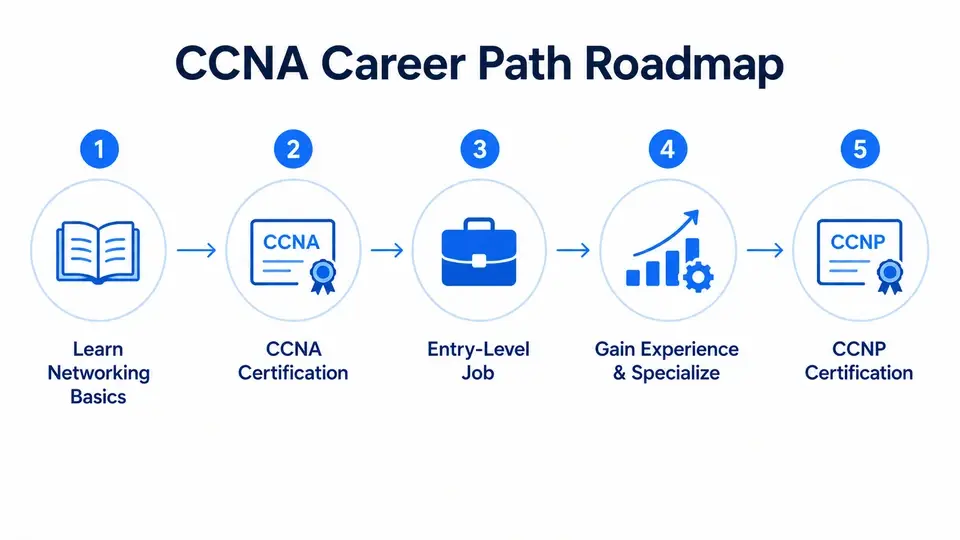
When you follow the Cisco CCNA career path, you typically progress through these stages:
- 1. Learning networking basics and terminology
- 2. Practicing with simulators or real lab equipment
- 3. Passing the certification exam
- 4. Applying for entry-level networking positions
- 5. Gaining experience and specializing further
What Makes It Different from Other IT Paths
Unlike software development paths that focus solely on coding, this route blends technical configuration skills with troubleshooting. You learn how networks function physically and logically, which many other certifications do not cover as deeply.
This balance of theory and hands-on practice is what makes the certification valuable for long-term career building, not just for passing an exam.
CCNA Job Roles You Can Explore
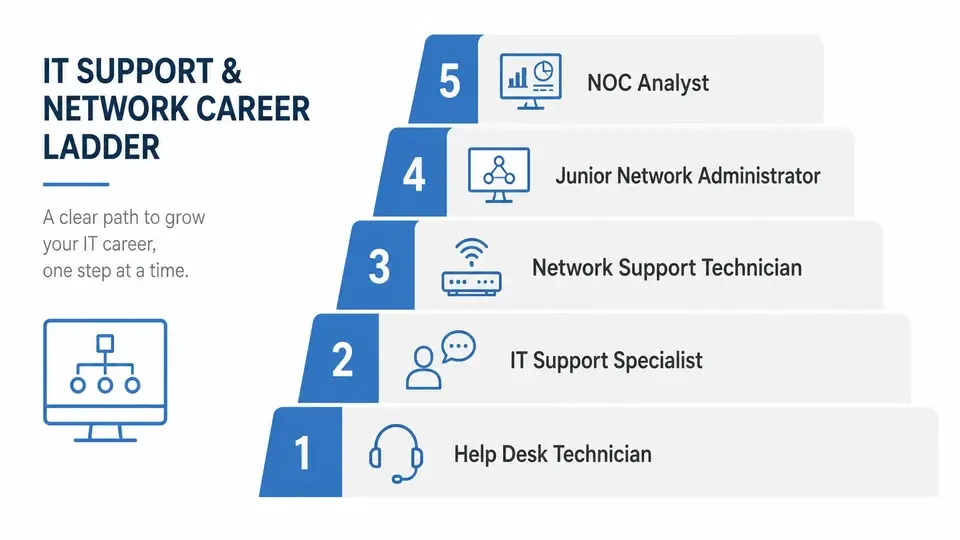
Once certified, a wide range of CCNA job roles become accessible, especially at the entry and associate levels. These roles usually involve maintaining, monitoring, and troubleshooting network systems within an organization.
Common positions include:
- Network Support Technician
- Junior Network Administrator
- Help Desk Technician with a networking focus.
- Network Operations Center (NOC) Analyst
- IT Support Specialist
Network Support Technician
This role focuses on day-to-day network maintenance for an organization. You handle tasks such as setting up network devices, replacing faulty cables or hardware, and responding to employee connectivity complaints.
- What you do: Install and maintain switches, routers, and cabling; respond to support tickets; perform basic diagnostics.
- How to get there: Most companies hire freshers directly into this role after CCNA certification, especially if you can show practical lab experience during interviews.
Junior Network Administrator
A junior administrator works under a senior engineer to manage smaller segments of a company's network, such as a single office location or department.
- What you do: Configure VLANs, manage user access on network devices, monitor bandwidth usage, and apply basic security settings.
- How to get there: This role often follows a few months in a support position, once you have shown reliability and a solid grasp of configuration tasks.
Help Desk Technician with Networking Focus
This is a support-oriented role where networking knowledge helps you resolve issues faster than a general help desk agent.
- What you do: Troubleshoot user connectivity problems, escalate complex network issues, and document recurring problems for the IT team.
- How to get there: Many freshers start here since it requires less hands-on configuration and more communication and problem-solving skills.
Network Operations Center (NOC) Analyst
A NOC (Network Operations Center) Analyst helps keep a company's network running smoothly by watching it from a central monitoring system, often working in shifts.
- What you do: Monitor the network for problems, respond to alerts, report issues, and work with other IT teams to fix them as quickly as possible.
- How to get there: Many employers prefer candidates with a CCNA certification who know the basics of networking, can use network monitoring tools, and stay calm while solving problems.
IT Support Specialist
This role is a good starting point if you want to learn different areas of IT before choosing a specific career path.
- What you do: Help employees solve common computer, software, and basic network problems. You are often the first person people contact when they need technical help.
- How to get there: This job is suitable for beginners and fresh graduates. It gives you hands-on experience and helps you decide whether you want to specialize in networking or another area of IT later.
Day-to-Day Responsibilities
In most of these jobs, you will help set up and manage network devices, check that the network is working properly, and fix connection problems. You may also work with experienced network engineers on bigger projects, giving you the chance to learn new skills while gaining real work experience.
These positions are typically the first professional step for someone who has just completed their certification and wants practical, real-world exposure to networking environments.
Career Path After CCNA Certification
A common question among learners is what comes next. The career path after CCNA usually depends on your interests, whether that is security, wireless networks, or enterprise infrastructure.
After certification, professionals often move in one of these directions:
- Network Administration: Managing and maintaining a company's computer network.
- Network Security: Protecting the network from threats and keeping company data safe.
- Cloud Networking: Managing networks that connect to cloud services and online systems.
- Wireless Networking: Setting up and maintaining Wi-Fi networks for businesses.
Choosing Your Specialization
It helps to spend your first year or two in a general networking role before narrowing down your focus. This way, you understand the broader picture before committing to a specialized track.
After earning your CCNA certification, the next step is to gain practical experience. Start working on real networking tasks, practice your skills, and learn from experienced professionals. As you gain confidence, you can choose the area of networking that interests you most and build your career in that direction.
CCNA to CCNP Career Path: The Next Step
Once you have gained some practical experience, many professionals see the move from CCNA to CCNP as a natural next step. Before deciding, it is helpful to understand the differences between CCNA and CCNP, including the skills, knowledge, and career opportunities each certification offers. CCNP is a more advanced certification that focuses on enterprise networking, security, automation, and troubleshooting.
The CCNA to CCNP career path typically involves:
- Working in a networking role for one to two years.
- Choosing a specialization, such as enterprise or security.
- Studying advanced networking concepts beyond CCNA fundamentals.
- Taking the relevant CCNP certification exam.
Is CCNP Necessary Right Away?
No, you do not have to move to CCNP right away. Many people spend a few years improving their CCNA skills by gaining real work experience first. This is a great way to build confidence and practical knowledge. When you feel ready, and your career requires more advanced skills, you can then choose to pursue CCNP. Taking one step at a time helps you become a better networking professional, not just collect certifications.
Is CCNA in Demand? Understanding the Job Outlook
Many beginners wonder if the CCNA certification is still worth getting today. The answer is yes. Every company relies on computer networks to connect devices and access the internet, so there is still strong demand for people with networking skills.
When people ask whether CCNA is in demand, they usually want to know if the skills are still relevant. Since networks are the backbone of cloud computing, remote work, and digital services, professionals with strong networking fundamentals are consistently in demand. Following a structured CCNA Learning Path can also help you develop the skills employers expect in entry-level networking roles.
What the CCNA Job Outlook Looks Like
The job opportunities after CCNA are good because every company depends on a computer network to connect devices and support daily work. Businesses need networking professionals to keep these networks running smoothly, solve connection problems, and keep them secure.
As you gain hands-on experience and learn new skills, such as cloud networking and automation, you can apply for better job roles and continue growing your career.
How to Start a Networking Career with CCNA
If you are wondering how to start a networking career with CCNA, the process is more structured than it may seem. It begins with building a strong conceptual foundation before moving into practical application. Learning through structured courses from SterlingNext Certification Programs can help you develop the hands-on networking skills needed before taking the CCNA certification exam.
Here is a simple step-by-step roadmap:
- 1. Learn the fundamentals of computer networking through a course.
- 2. Practice what you learn using networking software or a small practice lab.
- 3. Prepare for the CCNA Certification exam and pass successfully.
- 4. Keep practicing by setting up and testing simple network configurations.
- 5. Apply for entry-level networking jobs to gain real work experience.
Building Practical Experience
Theory alone is not enough. Setting up a small home network, practicing configurations, and troubleshooting common issues will make you far more confident during interviews and on the job.
This hands-on practice is often what separates candidates who get hired quickly from those who struggle, even with the same certification.
CCNA Career Growth and Entry-Level Opportunities
Understanding CCNA career growth helps you set realistic expectations for your career's progression. Growth in this field is steady rather than instant, built through consistent learning and on-the-job experience.
For freshers, jobs after CCNA are usually basic support roles where you learn networking by working with experienced professionals.
These roles may include technical support, junior network administration, and network monitoring jobs. In these positions, you handle simple tasks, help solve issues, and gain real-world experience step by step.
Job Roles for Freshers
If you have CCNA, you can get your first job in IT, telecom, or service companies. These jobs help you learn networking with real work.
Common beginner jobs:
- Technical Support Engineer
- Junior Network Engineer
- IT Helpdesk
Some people also start with internships to get experience before a full-time job.
Getting Hired Without Experience
A common challenge is finding a way to get a CCNA job without experience. Building a home lab, contributing to open-source networking forums, and showcasing practical projects during interviews can effectively bridge this gap.
Over time, CCNA career growth comes from consistently expanding your skill set, taking on more responsibility, and eventually mentoring newer team members as you gain seniority.
Conclusion
The CCNA Career Path offers a practical, structured way to enter the networking field, even if you are starting from scratch. From understanding job roles to planning your next certification step, this journey rewards consistent learning and hands-on practice. Whether you are aiming for a support role today or an advanced engineering position years from now, the foundation you build with CCNA stays relevant throughout your career. Stay curious, keep practicing, and let your skills grow one step at a time as you move forward in networking.
Recommended Reads
Get Certified With Industry Level Projects & Fast Track Your Career
Checkout Top 10 Highest Paying Jobs
Frequently Asked Questions
The CCNA Career Path begins after you earn your certificate. It helps you move from basic networking knowledge to IT jobs. With experience, you can choose areas like security, cloud networking, or enterprise networking based on your interests and goals.
Wondering which jobs you can get with CCNA? You can pursue roles such as network support technician, junior administrator, or NOC analyst, all of which provide practical, hands-on networking experience early on.
Common jobs after CCNA certification include technical support engineer, junior network engineer, and help desk specialist, all of which involve direct exposure to real network infrastructure and troubleshooting tasks.
The CCNA career path starts with basic networking and leads to IT jobs. Beginners can start with simple jobs like support roles, internships, or junior positions. As they learn more through real work, they can slowly move into areas like security, cloud, or enterprise networking based on their interest.
Yes, is ccna related to career path decisions is a fair question, and the answer is yes, since it directly shapes which entry-level roles and future specializations become accessible to you.
CCNA jobs and salaries can change depending on the company and location. For beginners, most jobs are simple support or basic networking work. These jobs help you learn by doing real tasks and slowly prepare you for better, more advanced IT jobs.
With CCNA, you usually start in support jobs handling basic networking tasks. Later, you move into network administration roles with more responsibility. With experience, you can become a network engineer and work on advanced networks like enterprise systems or security.
To begin, building a networking career with CCNA involves learning the fundamentals, practicing in labs, earning certification, and applying for entry-level technical support or administration roles.
The CCNA to CCNP career path involves gaining one to two years of practical experience, choosing a specialization, and then studying advanced topics before attempting the CCNP exam.
Besides exams, what I can do after earning my CCNA certification includes building home labs, contributing to networking communities, and applying for hands-on roles that strengthen real-world troubleshooting skills.