
Training Outcomes Within Your Budget!
We ensure quality, budget-alignment, and timely delivery by our expert instructors.
Table of Content
- Digital Communication Types Explained for Everyday Workflows
- What is Digital Communication: A Simple Definition
- Digital Communication Types Explained
- Benefits of Digital Communication
- Importance of Digital Communication in the Workplace
- Digital Communication vs Traditional Communication
- Evolution and What's Next for Digital Communication
- Digital Communication Examples Across Business and Society
- How to Improve Digital Communication Skills and Strategies
- Conclusion
Recent Blogs
Sprint Planning Best Practices: Template & Common Mistakes
August 21st, 2026
How to Write User Stories: Format, Examples & Acceptance Criteria
August 21st, 2026
Azure AZ-104 Exam Study Guide: Pass on First Attempt
August 21st, 2026
AWS SysOps Administrator Certification Guide
August 20th, 2026
Cloud Computing Salary Guide 2026: AWS, Azure & GCP
August 20th, 2026
CompTIA Cloud+ Certification: Complete Guide
August 20th, 2026
ISO 31000 vs ISO 27001
August 20th, 2026
CISM Certification Cost and Roadmap for Career Success
August 19th, 2026
CISSP Exam Format & Domains
August 19th, 2026
Closer Look at CISSP Requirements That Truly Matter Most
August 19th, 2026
CISSP Certification Path Steps For Aspiring Security Leaders
August 19th, 2026
CISSP Certification Benefits That Support Career Growth
August 19th, 2026
AWS DevOps Engineer Certification: Complete Guide
August 18th, 2026
AWS Developer Certification: Study Guide & Exam Tips
August 18th, 2026
ISO 22000 Documentation Requirements
August 18th, 2026
Digital Communication: Types and Importance
Last updated on July 30th, 2026
- Share
-

-

-

-

-

 Sachin Kumar
Digital communication is the sharing of information using electronic devices, the internet, and digital tools. If you've ever wondered what Digital Communication is, think of it simply as any interaction that happens through screens rather than in person
Digital Communication Types Explained for Everyday Workflows
Introduction
Every day, we send emails, join video calls, chat through apps, and share updates online. These are all examples of Digital Communication Types that help people stay connected, no matter where they are. Whether you're talking to a coworker, working with your team, or keeping in touch with friends, digital tools make communication faster and easier. Building Effective Communication Skills helps you share your ideas clearly and avoid confusion. In this blog, you'll learn what digital communication is, why it's important, and the different ways people use it at work and in everyday life.

What is Digital Communication: A Simple Definition
Digital communication is the sharing of information using electronic devices, the internet, and digital tools. If you've ever wondered what Digital Communication is, think of it simply as any interaction that happens through screens rather than in person; emails, texts, video calls, and social media posts all count.
Key Characteristics of Digital Communication
Digital communication is different from traditional communication in many ways. Here are some of its main features:
- Instant delivery: Messages are sent and received in just a few seconds, no matter where the other person is. You don't have to wait days like you would with a letter.
- Multiple formats: You can send text messages, photos, videos, voice messages, and files using the same app. Everything can be shared in one place without changing apps.
- Recorded history: conversations are often saved automatically, making it easy to refer back later. This is especially useful at work, where you might need to check exactly what was agreed upon in a chat from three weeks ago.
- Wide reach: a single message can reach hundreds or even thousands of people at once through emails, newsletters, or social posts, something no in-person conversation or phone call could match.
- Device dependency: it requires internet access and digital devices such as smartphones, laptops, or tablets to function, which also means poor connectivity or a dead battery can interrupt communication entirely.
- Two-way and interactive: most digital tools allow instant replies, reactions, and follow-up questions, making conversations feel more like a dialogue than a one-way announcement.
- Scalable and low-cost : whether you're messaging one person or broadcasting to an entire company, the cost and effort barely change, which is very different from printing letters or making individual phone calls.
These features make digital communication faster and easier than traditional communication. It helps people stay connected, communicate in different ways, share information quickly, and . At the same time, it can also cause problems like too many messages, misunderstandings, and less personal interaction.
Digital Communication Types Explained
Now that you know what digital communication is, let's look at the different ways people use it every day. Each type has a different purpose, and choosing the right one helps you communicate better.
Common Types of Online Communication
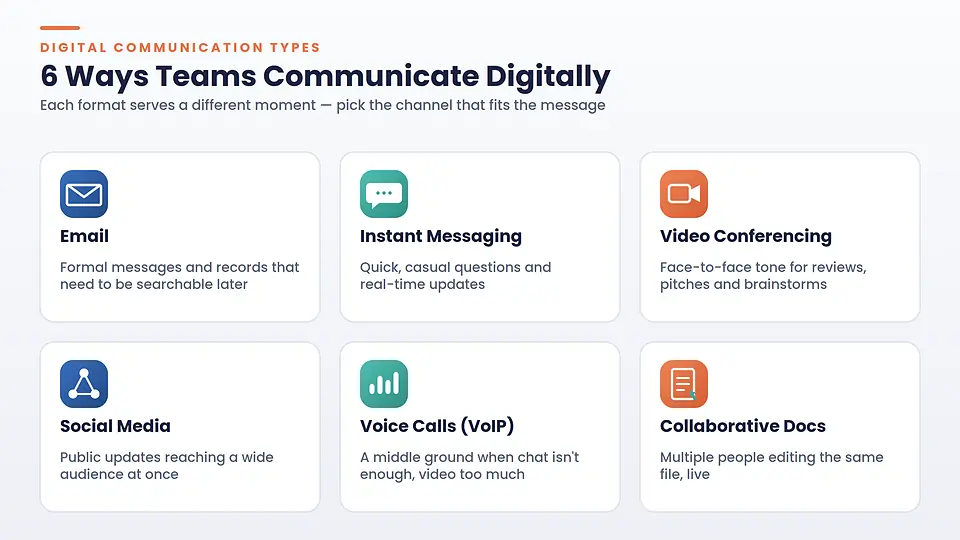
The most widely used formats today, along with what makes each one useful:
1. Email
Email is mainly used for formal communication and important messages. People use it for things like job applications, work updates, and sharing detailed information because emails are easy to save, search, and read later.
2. Instant Messaging
Messaging apps like Slack, WhatsApp, and Microsoft Teams are great for quick conversations. You can make use of them to ask questions, share updates, or plan things with others without writing a formal email.
3. Video Conferencing
Video call apps like Zoom and Google Meet let people talk face to face, even when they are far apart. They are useful for meetings, online classes, interviews, and group discussions because everyone can see and hear each other.
4. Social Media
Social media platforms let people share updates/ideas with others, upload photos, videos. People use them to stay in touch with friends, while businesses use them to promote their products, connect with customers, and grow their audience.
5. Voice Calls (VoIP)
Internet calling lets people make voice calls using apps like WhatsApp or Skype instead of a regular phone line. It is a good choice when you want to talk to someone but don't need a video call.
6. Collaborative Documents
Apps like Google Docs and Google Sheets let people work on the same file together at the same time. This makes school projects and team work easier.
Every way of communicating online has a different use. Use chat for quick messages, email for important information, and video calls when you need to talk face to face. Choosing the right one makes communication easier.
Benefits of Digital Communication
The Benefits of Digital Communication are more than just saving time. It helps people and businesses share information, work together, and stay connected more easily.
Advantages for Individuals and Businesses
Some of the main benefits are:
- Fast: Messages reach people in seconds.
- Saves money: You can send messages without spending much.
- Use it anywhere: You only need an internet connection.
- Easy to find later: Messages and files are saved.
- Connects people: You can talk to people anywhere in the world.
Supporting Teamwork
Digital Communication and Collaboration go hand in hand. Cloud-based Digital Communication Tools allow multiple people to work on the same document, discuss ideas in real time, and track project progress without being in the same room.
This is very helpful for people who work or study from different places. Instead of waiting for a meeting, they can send a message, share a file, or start a quick video call whenever they need to.
Beyond efficiency, these tools also help reduce misunderstandings, since written messages and shared documents leave less room for confusion compared to memory-based verbal instructions.
Importance of Digital Communication in the Workplace
You can see this in many businesses today. Teams use digital communication to share updates, work on projects, and help customers, even when people are in different places or countries.
How It Shapes Daily Work
Digital Communication in the Workplace has changed how teams function. Instead of relying solely on in-person meetings, employees now use a mix of Business Communication Channels. Professionals pursuing a Business Analysis Certification also learn how effective communication, stakeholder collaboration, and clear documentation contribute to successful business outcomes. Knowing the different Digital Communication Types helps you choose the right way to share information.
Building Effective Habits
Good digital communication starts with simple habits. Write clear messages, reply on time, and share important updates with everyone. These habits help people understand each other, avoid confusion, and work better as a team. They also help businesses make quicker decisions and give better service to their customers.
Digital Communication vs Traditional Communication
This comparison helps highlight just how much the way we interact has changed over time.
Key Differences
|
Aspect |
Traditional Communication |
Digital Communication |
|---|---|---|
|
Speed |
Slower (letters, in-person meetings) |
Instant (emails, chats, calls) |
|
Reach |
Limited to physical presence |
Global, anytime access |
|
Record-keeping |
Manual, often lost over time |
Automatically saved and searchable |
|
Cost |
Higher (postage, travel, printing) |
Lower, mostly internet-based |
|
Flexibility |
Fixed schedules and locations |
Available anytime, anywhere |
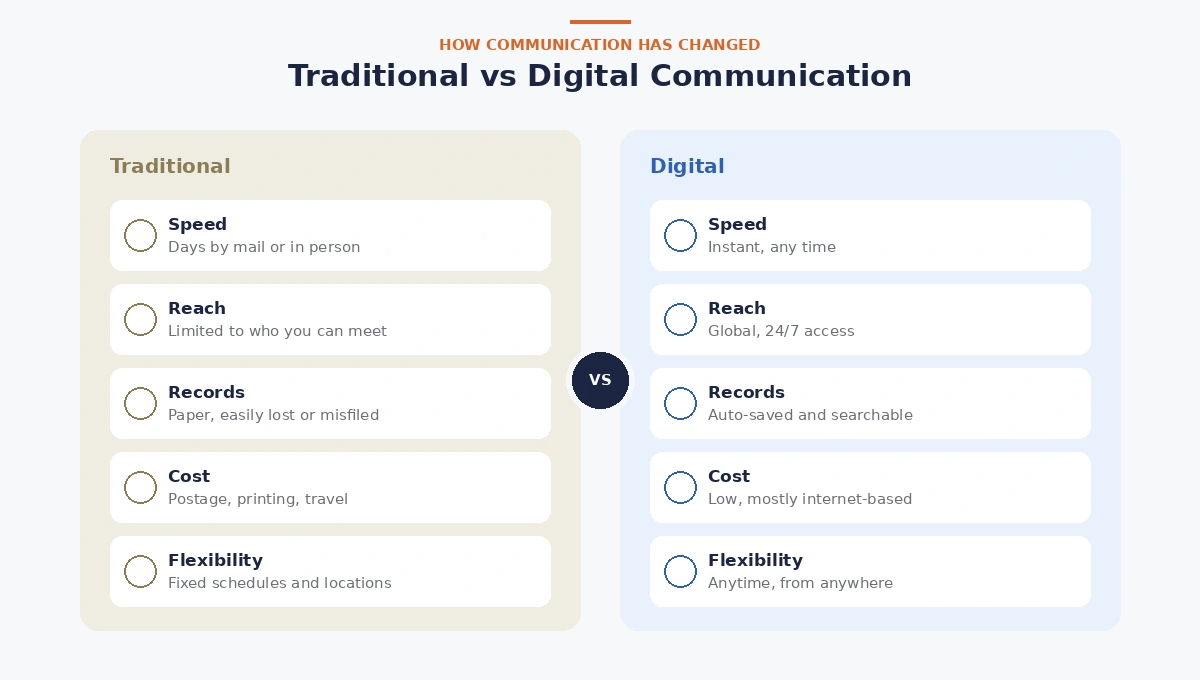
Traditional communication, such as face-to-face conversations, printed letters, or landline calls, still holds value, especially for sensitive discussions or building personal relationships. However, it lacks the speed and scalability that digital methods offer.
Why the Shift Happened
People and businesses use digital communication because it is fast, easy, and saves time. It helps people stay connected and share information quickly. But face-to-face communication is still better for some situations. Choosing the right way to communicate makes it easier for everyone to understand the message.
Evolution and What's Next for Digital Communication
Digital communication has become faster and easier over the years. It started with emails and simple messaging, then grew into instant messaging, video calls, and today even AI-powered chatbots. As technology improved, communication became faster and easier.
From Simple Messages to Smart Systems
At first, people could only send text messages. As technology improved, they could also make voice calls, video calls, and even talk to people in different languages using translation tools.
Emerging Digital Communication Trends
Some Digital Communication Trends shaping the present and near future include:
- AI-assisted messaging: smart replies and chatbots handling routine queries.
- Asynchronous communication: teams replying on their own schedule instead of expecting instant responses.
- Voice and video apps: Let people talk face to face through voice and video calls instead of only sending text messages.
- All-in-one apps: Some apps let you chat, make calls, and share files in one place, so you don't need to switch between different apps.
Looking Ahead
The future of digital communication will make it easier for people to connect. New tools will be smarter, faster, and more personal. Many apps will work together, and technology will help people communicate in ways that best fit their needs.
Digital Communication Examples Across Business and Society
Seeing real Digital Communication Examples makes it easier to understand how these concepts apply in daily life.
Examples in Business
- A sales team using email and CRM chat tools to follow up with leads
- Customer support teams handling queries through live chat or social media messages
- Remote employees joining daily stand-ups via video calls
Examples in Everyday Life
- Sending messages on chat apps.
- Making video calls with friends or family.
- Sending emails for work or school.
- Sharing photos and videos online.
- Using apps for shopping or payments.
These everyday moments show how deeply digital methods are woven into both professional and personal routines.
Popular Tools and Platforms
The right tool depends on what you want to do. Some of the Best Digital Communication Tools include Slack, Microsoft Teams, Zoom, and Gmail. Each is designed for different needs, from quick messages to online meetings and email communication.
Various Digital Communication Platforms also help businesses centralize their conversations, files, and updates in one place, helping teams stay connected without using too many different apps.
How to Improve Digital Communication Skills and Strategies
Knowing which habits actually work can make a real difference in how teams and individuals connect every day.
Building Better Habits
Strong communication habits help avoid misunderstandings and make interactions more productive. Developing these skills through continuous learning, including SterlingNext Professional Development, can support long-term career growth.
- Writing clear, concise messages instead of long paragraphs.
- Using proper tone, since text can't convey emotion the way voice does.
- Confirming understanding by summarizing key points in follow-up messages.
- Choosing the right channel chat for quick things, email for detailed ones.
Practical Digital Communication Strategies
Simple strategies such as setting response-time expectations, avoiding unnecessary meetings when a message will do, and using Workplace Communication Tools consistently can help everyone stay on the same page.
Small changes like these often lead to noticeably smoother collaboration, fewer repeated conversations, and less confusion overall benefits that compound over time as teams get more comfortable working digitally together.
Conclusion
Digital communication has changed the way people connect, work, and share ideas. It makes communication faster, easier, and more flexible than older methods. From emails and video calls to online teamwork tools, each method helps people stay connected in different ways. Understanding different Digital Communication Types helps you choose the best way to share your message and respond to others. When used wisely, these tools support clear communication, stronger teamwork, and better results. They also help people adapt to new technology and stay connected in everyday life and at work.
Get Certified With Industry Level Projects & Fast Track Your Career
Checkout Top 10 Highest Paying Jobs
Frequently Asked Questions
The main Digital Communication Types include email, instant messaging, video calls, social media, and online voice calls. Each type helps people communicate in different ways depending on their needs and situation.
It means exchanging information through devices like phones and computers instead of using paper or meeting in person, it includes texts, emails, video calls, and online chats to connect people anywhere.
Digital communication helps people work faster by making it simple to exchange, update, get approvals, and work together. It saves time and money, supports remote work, and keeps teams connected without needing extra meetings or paperwork.
Traditional methods need you to be in the same room or send something on paper: a letter, a face-to-face chat, a landline call. Digital communication skips all that. It runs on electronic tools, so messages arrive instantly, get saved automatically, and can reach people almost anywhere.
Emails, group chats, video calls, a quick comment on a social media post, or two people editing the same Google Doc at once these are all things most of us do without even thinking about it, at work and outside of it.
Choosing the right tool depends on the situation. Slack and Microsoft Teams help with quick conversations, Zoom is useful for video calls, and Gmail is better for formal communication. Most companies use different tools together to handle their daily communication needs.
Digital communication has evolved from simple tools like emails and text messages to advanced apps, video calls, and online platforms. In the current era AI also help people write message find information and communicate faster ,connection building easier and more efficient.
Good digital communication needs simple writing, the right tone, and careful listening. Choosing the best way to communicate, such as chat, email, or a call, helps people understand messages clearly and prevents confusion.
More automation, for one AI handling routine replies so people can focus on the messages that actually need a human touch. Tools are also merging together, so chat, video, and file sharing increasingly live in one place instead of five different apps.
Not really, and it probably shouldn't try to. Digital tools are great for speed and convenience, but some conversations, a tough piece of feedback, a first meeting with a new client still land better in person. Most people end up mixing both depending on what's at stake.